DeepISLES: a clinically validated ischemic stroke segmentation model from the ISLES'22 challenge
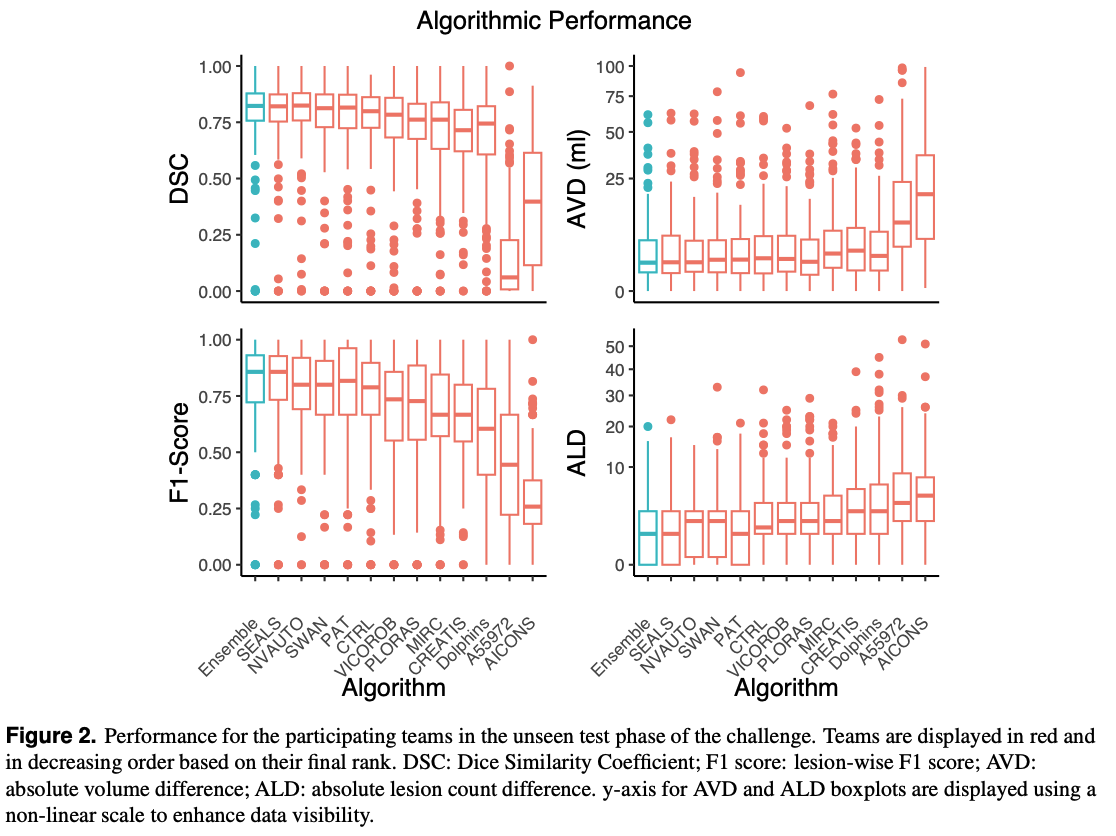
Diffusion-weighted MRI (DWI) is essential for stroke diagnosis, treatment decisions, and prognosis. However, image and disease variability hinder the development of generalizable AI algorithms with clinical value. We address this gap by presenting a novel ensemble algorithm derived from the 2022 Ischemic Stroke Lesion Segmentation (ISLES) challenge. Our ensemble model combines the strengths of top-performing algorithms and achieved superior ischemic lesion detection and segmentation accuracy (median Dice score: 0.82, median lesion-wise F1 score: 0.86) on our internal test set compared to individual algorithms. This accuracy generalized well across diverse image and disease variables. Validation using a real-world external dataset (N=1686) confirmed the model’s generalizability. The algorithm’s outputs also demonstrated strong correlations with clinical scores (admission NIHSS and 90-day mRS) on par with or exceeding expert-derived results, underlining its clinical relevance. Notably, in a Turing-like test, neuroradiologists consistently preferred the algorithm’s segmentations over manual expert efforts, highlighting increased comprehensiveness and precision.
de la Rosa, E., Reyes, M., Liew, S.-L., et al. (including Chalcroft, L.) (2025). DeepISLES: a clinically validated ischemic stroke segmentation model from the ISLES'22 challenge. Nature Communications, 16, 7357.